Telegram:@smsxcg
WhatsApp:+1(305)6290111
Address:1600 Pennsylvania Ave NW,Washington,DC20500,USA



This undated file photo shows a view of Xi'an Hi-tech Industries Development Zone in Xi'an, northwest China's Shaanxi Province. (Xinhua)
XI'AN, April 19 (Xinhua) -- In an increasingly uncertain global economy, many multinational companies are still choosing to deepen their presence in China. They are attracted by a combination that remains difficult to match: a well-developed industrial chain, a vast market and a stable policy environment that continues to support foreign investment.
It also shows why companies long-established in China are not merely staying put, but expanding, localizing and, in some cases, using the country as a base to serve other markets. Their investments are becoming more closely tied to local industrial chains, with effects visible in areas from smart farming equipment and cold-chain logistics to semiconductors and aircraft assembly.
In Yangling, an agricultural hub in northwest China's Shaanxi Province often described as the country's "agri-science city," Canada-based McCain Foods operates a production line capable of turning out 100,000 tonnes of French fries and other potato products a year. The 200-million-U.S. dollar facility began operations in 2023.
"We named it SUDU, the Chinese pinyin for 'speed,' to highlight how efficiently the project was brought to fruition, thanks to the favorable local business climate," said Sherry Duan, Head of Legal & External Affairs of McCain China.
This year marks McCain's 30th anniversary in China. The company opened its first Asian French-fries factory in Harbin, northeast China's Heilongjiang Province, in 2005. Since then, it has built a relatively complete chain in China, spanning cultivation, processing and distribution. According to a company report, McCain has worked with local farmers to develop more than 1 million mu (about 66,667 hectares) of high-standard potato farms and created more than 100,000 jobs.
For McCain, China is not simply a sales market. It is a place where an agricultural supply chain can be built out at scale. Pierre Danet, regional president of Asia Pacific and South Africa at McCain, said the firm would continue to act as a bridge for China-Canada cooperation through agricultural trade, technological exchange and sustainable development, while contributing to China's agricultural modernization.
The local government expects the Yangling project to do more than add output. Zhang Huiya, deputy director of the Investment Promotion Bureau of the Yangling Agricultural Hi-tech Industrial Demonstration Zone, said it could help attract related businesses in cold storage, potato-product research and development, and smart farming equipment.
The project is also expected to support potato-breeding research in collaboration with Northwest A&F University, with the longer-term aim of fostering a potato industry cluster in Shaanxi.
McCain's trajectory reflects a broader pattern. For multinationals that have spent years, and in some cases decades, building operations in China, the country's appeal lies in its combination of industrial depth, market scale and policy stability.
Robin Xing, chief economist at Morgan Stanley China, noted that China's ability to integrate industrial chains is almost irreplaceable globally. Even amid a less favorable external environment, he argued, the size of the market and the stability of the business environment continue to support foreign firms operating in the country.

This photo shows the inauguration ceremony of Airbus' second Final Assembly Line (FAL) for A320 family aircraft in Tianjin, north China, Oct. 22, 2025. (Xinhua/Sun Fanyue)
Recent data suggest much the same. According to China's Ministry of Commerce, 8,631 new foreign-invested enterprises were established nationwide in the first two months of 2026, up 14 percent year on year. Actual use of foreign investment in high-tech industries rose 20.4 percent to 63.21 billion yuan (about 9.21 billion U.S. dollars).
Such strengths are particularly difficult to match in industries that depend on scale, dense supplier networks and tightly integrated production ecosystems. In 2012, Samsung Electronics established its only overseas memory-chip fab in Xi'an Hi-tech Industries Development Zone. The facility now accounts for about 40 percent of the company's NAND flash output. Last year Samsung invested 465.4 billion won, or about 313.72 million U.S. dollars, in the Xi'an plant, up 67.5 percent from a year earlier.
The investment has helped anchor a wider semiconductor ecosystem. Ren Junfeng, deputy director of the development zone's management committee, said the zone had attracted more than 40 Korean-funded enterprises since 2010, with cumulative investment exceeding 32 billion U.S. dollars. Around Samsung, a semiconductor cluster encompassing design, manufacturing, packaging, testing, materials and equipment has taken shape.
Such cases show that for foreign investors, China now offers not only market access, but also participation in a broader industrial and innovation ecosystem. The country has continued to ease restrictions on foreign investment, with market access limits in the manufacturing sector now fully removed.
According to the outline of China's 15th Five-Year Plan (2026-2030) for national economic and social development, China will further expand opening up, especially in services, improve support and protection for foreign investors, and encourage foreign firms to establish regional headquarters, research centers and make further domestic reinvestment.
The deepening presence can also create a spillover effect that extends beyond China. In the northern Chinese port city of Tianjin, Airbus inaugurated a second Final Assembly Line for A320 family aircraft in China last October, the second such line in both China and Asia as a whole. This suggests something larger than a market entry story. For some multinationals, China is becoming not just a destination for capital, but part of their global production architecture.
Which is why, despite the noise surrounding global uncertainty, many foreign firms do not appear to be stepping back from China. They are digging in more deeply.



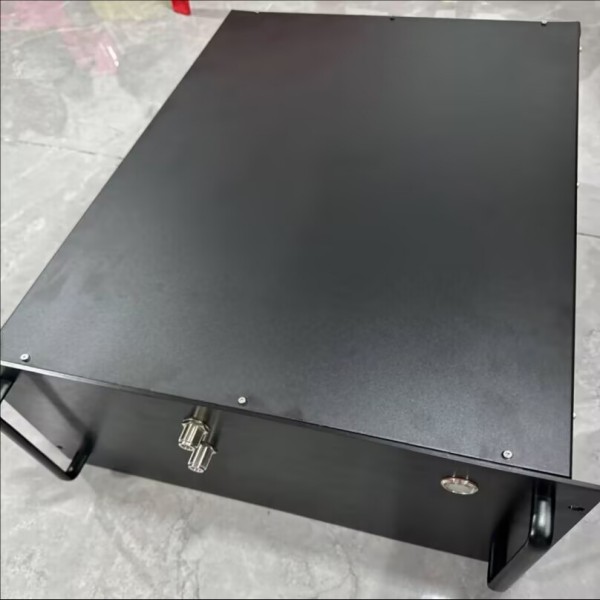
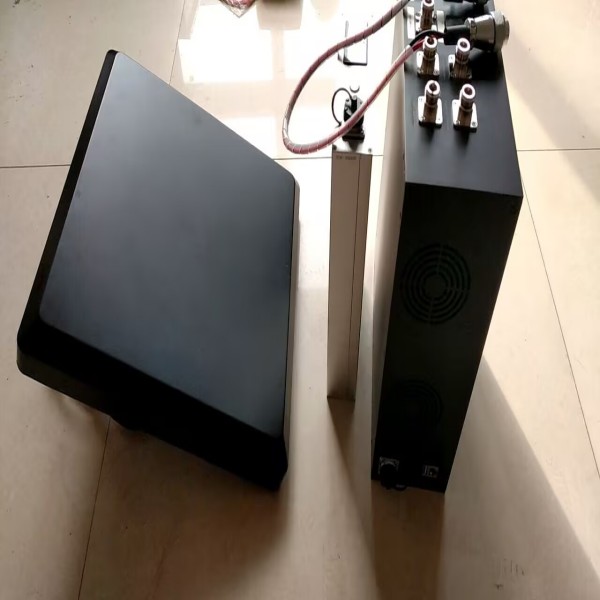
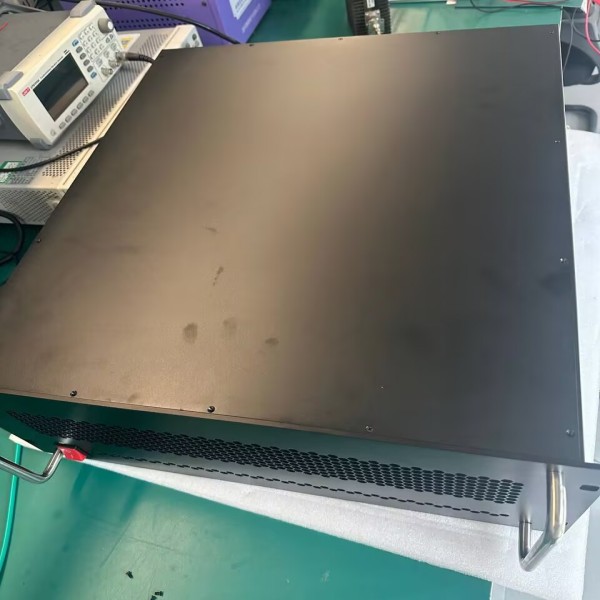
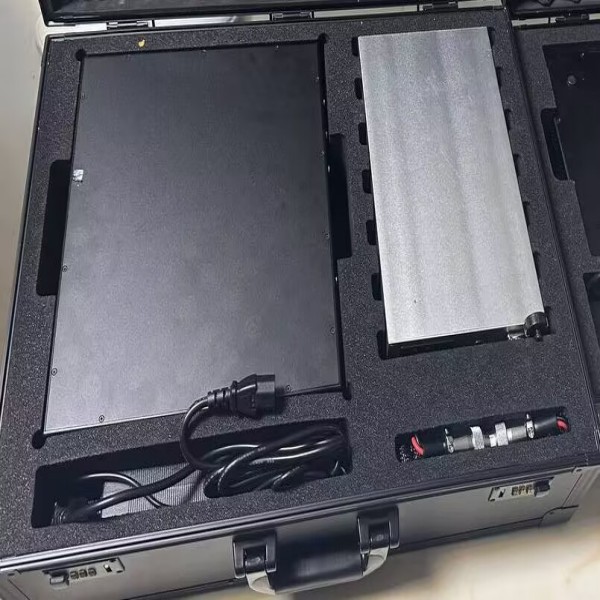
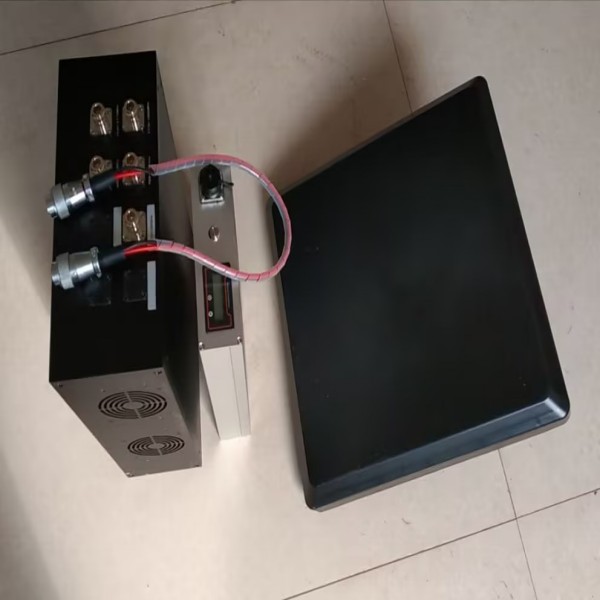
Sms Blaster Machine Famous Manufacturer.sms broadcaster machine price,sms blasting machine,SMS Broadcaster Machine,Bulk SMS Blaster,SMS Free Blasting Broadcast Machine.Sms Blaster Machine Can Bulk SMS automatically around you with radius 1000m-3km.We specializes in providing cutting-edge SMS advertising marketing equipment that allows businesses to reach their target audience more effectively!
Telegram:@smsxcg
WhatsApp:+1(305)6290111
Address:1600 Pennsylvania Ave NW,Washington,DC20500,USA