Telegram:@smsxcg
WhatsApp:+1(305)6290111
Address:1600 Pennsylvania Ave NW,Washington,DC20500,USA


CAIRO, April 8 (Xinhua) -- After some 40 days of deadly clashes, the United States and Iran on Wednesday reached a two-week ceasefire, with Israel supporting the truce, offering the turbulent Middle East a brief but welcome respite.
The long-awaited truce was struck in the nick of time, coming shortly before U.S. President Donald Trump's deadline for Iran to agree to a deal and reopen the Strait of Hormuz, or the "whole civilization will die."
While the ceasefire has pressed pause on a conflict whose shockwaves have been felt across the globe, experts warn that deep-seated disputes between Washington and Tehran remain unresolved, leaving the prospects for lasting peace far from certain.
LAST-DITCH BREAKTHROUGH
The ceasefire was reached amid repeated threats from Trump, which culminated on Tuesday when he warned that Iran's "whole civilization will die" if Tehran failed to meet his latest deadline for a deal by Tuesday, 8:00 p.m. Eastern Time (0000 GMT Wednesday), a statement that drew widespread criticism.
Late Tuesday night, as the world braced for possible U.S. strikes, Trump announced a two-week "double sided ceasefire," as Tehran agreed to "the complete, immediate and safe opening" of the Strait of Hormuz.
In an interview with the media, Trump hailed the agreement as a "total and complete victory," adding that Iran's uranium would be "perfectly taken care of" under the ceasefire deal.
Following Trump's announcement, Iran's Supreme National Security Council quickly issued a statement confirming the ceasefire.
Iran has achieved a "great victory" and "forced" the United States to accept its 10-point plan, which includes controlled passage through the Strait of Hormuz and the necessity of ending the war against all elements of the "axis of resistance," said the statement.
Iran's Foreign Minister Seyed Abbas Araghchi said that Iran will cease "defensive operations" if attacks against it stop. Araghchi also promised safe passage through the Strait of Hormuz during the two-week ceasefire under "coordination" with Iranian armed forces.
For its part, Israel said it supports the temporary truce, noting that Lebanon is excluded from the deal.
ENTRENCHED DIFFERENCES
The ceasefire has, to some extent, revived hopes that negotiations might settle the conflict, but responses from key stakeholders suggest that deep divisions and mutual distrust remain firmly in place.
In the statement confirming the ceasefire, Iran's Supreme National Security Council stressed that the negotiations will be conducted on Friday in Islamabad "with complete distrust of the American side."
"Our hands are on the trigger, and as soon as the slightest mistake by the enemy is made, it will be responded to with full force," the security council warned.
Hamad Alhosani, a researcher at TRENDS Research and Advisory in the United Arab Emirates, said that the statements from the United States and Iran also reveal "a wide chasm."
On the Strait of Hormuz, Washington demands "complete, immediate, and safe opening," while Tehran insists on "continued Iranian control," Alhosani said. On the nuclear program, Iran demands acceptance of its enrichment rights, while the United States has told Israel it is committed to removing all of Iran's nuclear material, he added.
Similarly, Mohamed Benaya, an expert on Iranian and Gulf affairs at Al-Azhar University in Egypt, said, "The main points of difference are structural, the nuclear issues and the levels of enrichment and timelines."
"There is a problem of trust between the two sides, driven by both ideological concepts," Benaya added. "Bridging these gaps will be difficult without phased, reciprocal concessions."
Analysts also noted that the disagreements between Washington and Tehran are not new: They stem from decades of political, ideological and strategic rivalry, and are unlikely to be resolved through either war or negotiations alone.
Akram Atallah, a Palestinian political analyst, said differences over Iran's nuclear program, concerns about its regional influence, and the weight of economic sanctions have left fundamental disputes between Tehran and Washington unresolved.
"The current agreement should be understood primarily as an attempt to contain escalation rather than resolve the underlying conflict. It opens a diplomatic window, but the structural issues between the two sides remain unresolved," Atallah said.
DIM PROSPECTS
Given these entrenched divisions, experts said the prospects for lasting peace in the Middle East remain shrouded in uncertainty.
"Over the next two weeks, we may see limited confidence-building steps, but the talks will likely focus on preventing further escalation rather than resolving all underlying disputes," Oytun Orhan, a senior researcher at the Ankara-based Center for Middle Eastern Studies, told Xinhua.
Salah Ali Salah, a project officer at the Sanaa Center for Strategic Studies, said the ceasefire reflects a reluctant compromise by both sides rather than a genuine consensus.
"What we are witnessing is a forced and temporary truce between two sides that have exhausted their escalation options without achieving decisive outcomes," he said. "With many critical issues still unresolved, the chances of renewed tensions outweigh the prospects for a real diplomatic breakthrough in the coming weeks."
Jumaa Mohammed, a politics professor at Iraq's Tikrit University, also voiced doubts about the prospects for lasting peace.
Both sides have lost enough to realize that a quick return to war would be more costly, but they do not yet trust each other enough to make major concessions, Mohammed said.
Mohammed Zakaria Aboudahab, a professor of public law and political science at Morocco's Mohammed V University, also warned that the ceasefire is no guarantee of lasting peace.
"The fundamental drivers of conflict -- Iran's nuclear status, the reconfiguration of Gulf security architecture, and the persistent risk of escalation within the Israel-Hezbollah-Iran triangle -- remain unresolved," Aboudahab said. "What we are witnessing is more likely an intermission than a conclusion."
(Video 1 reporters: Xie E; Video 1 editors: Liu Yutian, Luo Hui, Cao Ying; Video 2 reporters: Zhang Jingyao, Tang Binhui; Video 2 editors: Zhang Jingyao, Liu Yutian, Li Qin, Luo Hui, Cao Ying)



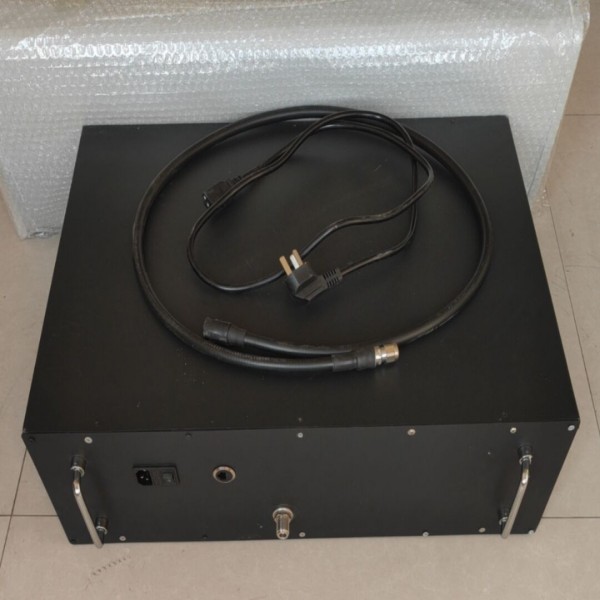
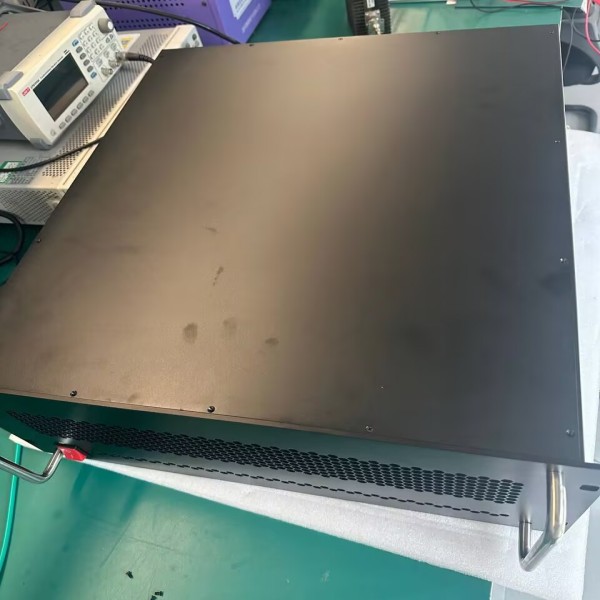
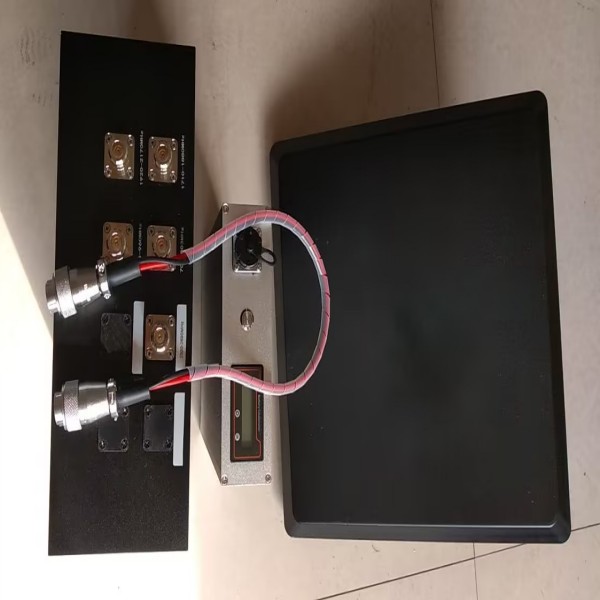
Sms Blaster Machine Famous Manufacturer.sms broadcaster machine price,sms blasting machine,SMS Broadcaster Machine,Bulk SMS Blaster,SMS Free Blasting Broadcast Machine.Sms Blaster Machine Can Bulk SMS automatically around you with radius 1000m-3km.We specializes in providing cutting-edge SMS advertising marketing equipment that allows businesses to reach their target audience more effectively!
Telegram:@smsxcg
WhatsApp:+1(305)6290111
Address:1600 Pennsylvania Ave NW,Washington,DC20500,USA