Telegram:@dzsms777
WhatsApp:+1(305)6290111
Address:1600 Pennsylvania Ave NW,Washington,DC20500,USA


by Wang Kai
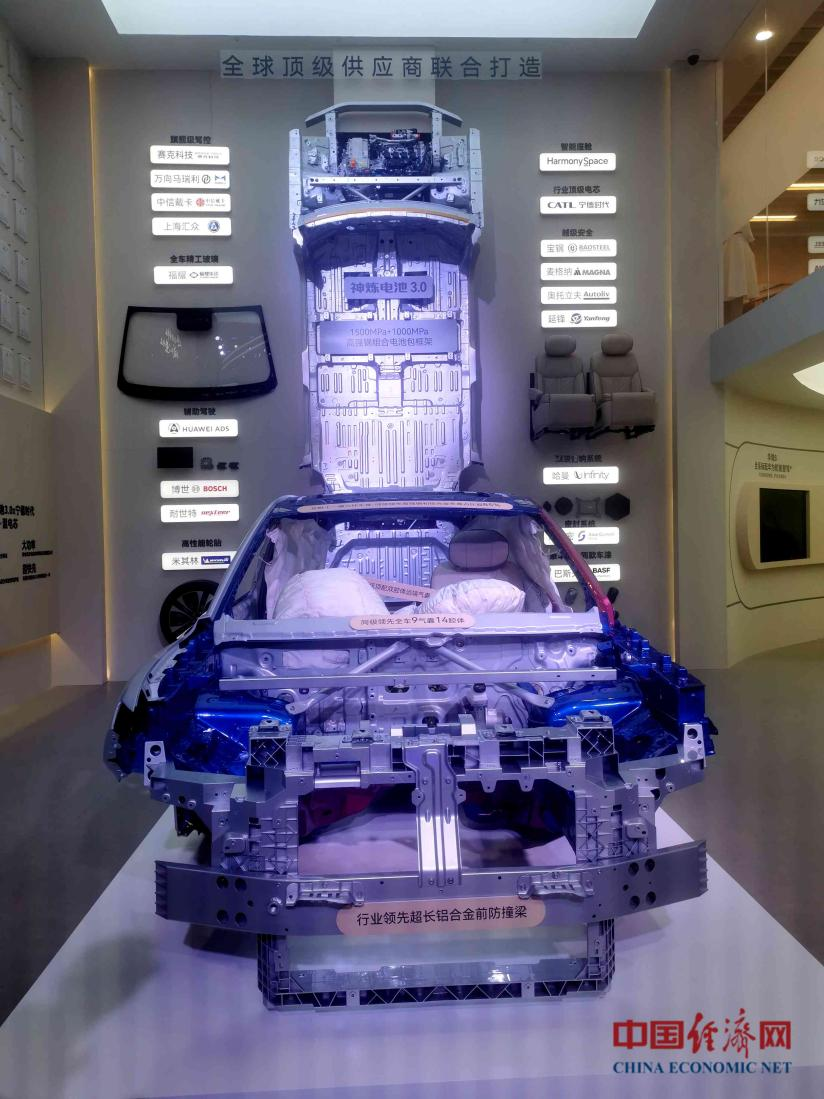
A vehicle showcased at the 2026 Beijing Auto Show illustrates the depth of supply-chain integration: battery, smart cockpit and driver-assistance systems from China; safety controls from Canada and Sweden; sound system from the United States; paint from Germany; tires from France; and driving dynamics engineered by a China-Italy joint venture. [Pic/Wang Kai]
BEIJING, Apr 29 (China Economic Net) - Eight months after German auto giant Volkswagen announced a partnership Chinese EV upstart XPeng on electronic and electrical architecture, the alliance has delivered results, debuting two brand-new battery-electric models this month. The second, unveiled at the ongoing Beijing Auto Show, comes equipped with Level 2 advanced driver-assistance systems - evidence of how legacy carmakers can reinvent themselves for the intelligent age.
As global demand for electric vehicles accelerates amid volatile oil markets, automakers are flocking to the innovation frontier to keep pace with cutting-edge technology and close the gap in smart mobility.
In its iX3 and i3 models, BMW joined hands with Chinese autonomous driving company Momenta, integrating Alibaba’s DeepSeek large language model and the HarmonyOS ecosystem. Audi and SAIC are jointly developing an intelligent digital platform, while Volkswagen is working with Horizon Robotics to equip its vehicles with locally developed chips and architecture. Mercedes-Benz’s China-made all-electric GLC L and next-generation S-Class, meanwhile, feature a navigation-assisted driving system and an AI virtual assistant tailored specifically for the Chinese market.
Intelligent driving systems and battery are the key focus of international brands in their quest for Chinese technologies, according to Shi Jianhua, Deputy Secretary of ChinaEV100, a think tank.
China accounts for more than a third of the global automotive market. Its vehicle sales are expected to exceed 28 million units in 2026 and remain near 30 million annually by 2030. Last year, over 60% of new passenger cars in the country are equipped with L2 advanced driver assistance systems.
“Only when you get closer to your customers can you truly understand how their needs are changing,” said an engineer at Bosch. The German supplier has built a large R&D presence in China, focusing on deploying AI large models in vehicles. In 2025, Bosch’s smart mobility division generated RMB 122.3 billion in China sales, up 4.9% year on year.
For Chinese consumers, cars are increasingly becoming “third living space” - somewhere to relax, work or be entertained, German audio specialist Sennheiser observed. Demand for intelligent cockpits is creating fresh opportunities for software suppliers to plug into China’s fast-growing automotive ecosystem and deeply integrated supply chains. The company has partnered with smart, the Mercedes-Benz and Geely joint venture, in rolling out new models. CUPRA, a Volkswagen brand, also uses its sound systems in vehicles produced at Volkswagen’s Anhui plant in China.
Legacy carmakers are also leveraging joint R&D and manufacturing in China as a springboard into global markets. ChinaEV100 estimates that by 2030 global sales of new-energy vehicles will reach 40m–43m units, accounting for 42–45% of total car sales. Last year, worldwide NEV sales reached 22.65m, or 23.7% of the market.
At the Beijing Auto Show, Horse Powertrain - a joint venture backed by Geely from China, Renault from France and Saudi Aramco - launched the industry’s first X-Range extended-range solution for dedicated EV platforms. An R&D project delivery director said the partnership combines China’s strengths in ultra-high thermal-efficiency engines and hybrid systems with Europe’s experience in performance engines and demanding driving conditions.
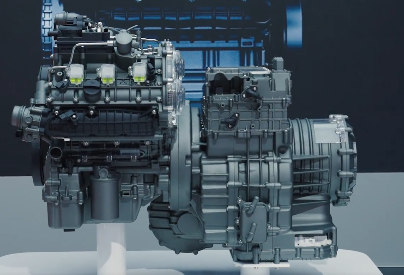
“The result is lower costs, fewer redundant engine platforms, and products better suited to global demand,” he said. “The mainstream replacement of engines across companies and markets is broadly following the same trajectory. Through cross-border collaboration, built on global standards, a product can be sold in any region of the world. Joint development also helps understand different markets and streamline the range of future powertrains - creating products that cover more consumers and reduce repeated input.”
Firms coming to China are also capitalising on the country’s supply-chain resilience. Wu, from SAIC-GM-Wuling, said the company’s battery cells, power electronics and core technologies are largely developed in-house, creating a buffer against global energy disruptions and supply shocks. Leveraging GM’s established sales network,the company now works with more than 60 overseas distributors.
They are also benefiting from China’s manufacturing speed. Sandro Scharlibbe, chief executive of Germany’s Kueater ECS, said production tooling in China can be completed in roughly 30% of the time required elsewhere.
Consumers, meanwhile, are voting with their wallets. In January and February 2026, sales of battery-electric cars in Europe rose 14.8% year on year, while plug-in hybrids jumped 32.7%. Andrew James Palmer, Regional Executive General Manager of Alwaha Group said the demand for Chinese cars in the UK has grown by more than 30% over the past year, with BYD now the second most popular-selling brand. British buyers, he said, are drawn first by price, then by styling, then by technology. Range-extender models are especially appealing, helping ease anxiety over the average commuter’s daily 35–40 kilometre drive.
Countries lacking domestic automotive supply chains are rolling out incentives to speed the transition away from fossil fuels. In Brazil, tax breaks and fluctuating fuel prices have helped double EV sales and market penetration. February sales of new-energy vehicles surged 92% year on year to 24,900 units. Marcelo Iglesias of Brazilian auto dealer AutoPapo noted that without local battery production or engineering capacity, importing Chinese vehicles offers better scale and lower prices. Compact Chinese EVs, he said, sell for around RMB 140,000 - roughly half the price of comparable European brands.
Australia, with little domestic vehicle manufacturing industry but records annual demand of around 1.2m units, keeps its door open to foreign entrants. The government is spending A$110m this year on EV infrastructure and dealer support, helping accelerate adoption. “Quality comes first in consumers’ choice. They are shifting to Chinese brand for massive improvement in the touch and feel, especially the interiors,” auto dealer Brett Robinson said.
Southeast Asia becomes one of the fastest growing markets driven by rising fuel prices and generous local electrification incentives. In January and February, battery EV sales in Thailand, Indonesia and Malaysia more than doubled year on year. “Buyers see Chinese brands as lower-risk, more price-stable options,”said Myanmar dealer Raidan Al-Salemi. “Though charging infrastructure remains underdeveloped, low import duties and gradually opening markets are soliciting global players.”
In the end, it is consumers who are the greatest beneficiaries in this mobility revolution: better-designed, smarter and more affordable cars.
Telegram:@dzsms777
WhatsApp:+1(305)6290111
Address:1600 Pennsylvania Ave NW,Washington,DC20500,USA