Telegram:@smsxcg
WhatsApp:+1(305)6290111
Address:1600 Pennsylvania Ave NW,Washington,DC20500,USA


By Meng Fanrong
ISLAMABAD, Mar. 27, (China Economic Net) - As China and Pakistan celebrate 75 years of diplomatic relations, the narrative of this friendship is often told through infrastructure projects and economic corridors. Yet, for Dr. Abdul Ghafoor Lone, a professional archaeologist and Director of the Islamabad Museum at the Department of Archaeology and Museums (DOAM), the true foundation of this bond lies buried beneath millennia of history. It is a relationship etched in stone, painted on pottery and woven into the very fabric of their shared heritage - an eternal friendship that continues to be rediscovered, one artifact at a time.
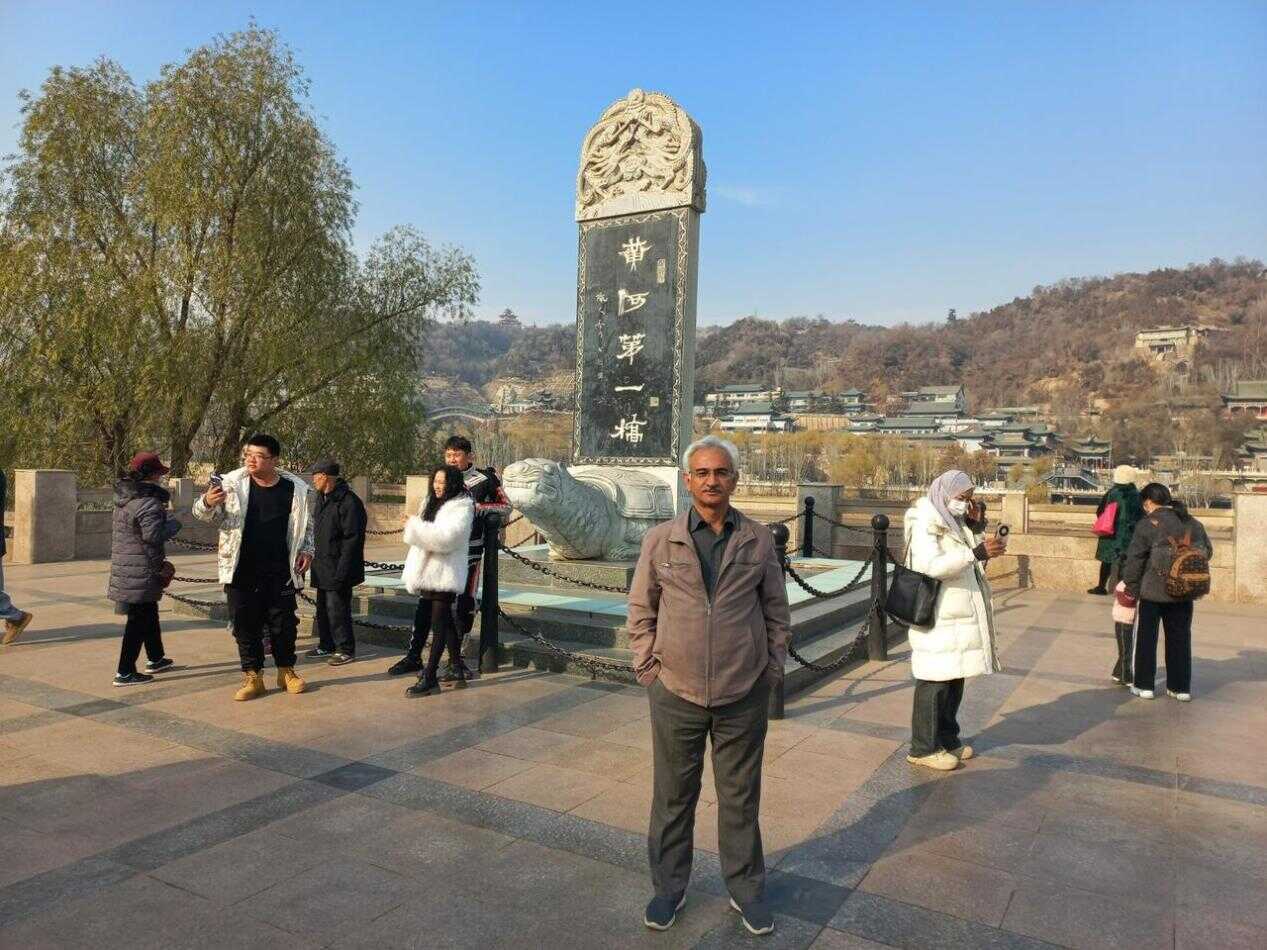
Dr. Abdul Ghafoor, Director of the Islamabad Museum, participates in a field study in China, photo provided to CEN
“The Islamabad Museum, as well as all museums in Pakistan exhibiting Gandhara art, are the key witnesses to this undeniable claim that we have eternal friendship, with deep relations and contacts stretching back thousands of years,” Dr. Abdul Ghafoor said in an exclusive interview. “.”
The Islamabad Museum houses a unique collection that physically embodies this ancient connection. Among the rare artifacts are Gandharan stone relief panels and toilet trays adorned with a distinctly Chinese motif: the dragon. This artistic fusion is complemented by a two-way trade. “Besides this, the Islamabad Museum has a good collection of porcelain pottery from China, probably dating back to the 14th century,” he added. Cultural exchanges were further cemented by the spread of Buddhism. When Buddhism expanded into China in the 4th century, it left a lasting imprint on the landscape of northern Pakistan, with numerous rock carvings depicting Chinese graphics and engravings found especially in Gilgit and Swat.
While the artifacts tell a story of continuity, many of them have remained hidden from the public eye for decades. That changed in 2023 when a major Gandhara exhibition traveled from Pakistan to Beijing’s Palace Museum. The exhibition, featuring 173 artifacts from seven Pakistani museums, marked a watershed moment in cultural diplomacy. Dr. Abdul Ghafoor, who oversaw the selection of artifacts for the landmark event, recalled the significance of the moment. Among the pieces chosen was a stunning 2nd– 3rd century Buddha relic that had been locked away in storage for 17 years.
He described Gandhara art as a “cultural and spiritual bridge” between the two nations - a sentiment that resonated deeply with the thousands of visitors who flocked to see the relics in Beijing. Such opportunities have since multiplied. In 2025, the exhibition “Where Civilizations Meet: Collections from Museums of the Shanghai Cooperation Organization Member States” was held at the National Museum of China in Beijing, where Pakistani artifacts once again captured public attention on this prestigious platform.
This shared heritage has increasingly become the focus of growing academic collaboration between the two nations. Between 2018 and 2022, two joint field investigations took place in the Taxila region, a UNESCO World Heritage site and a cradle of Gandhara civilization. In recent days, memorandums of understanding (MoUs) are in progress to conduct further field excavations in Taxila, signaling a renewed commitment to archaeological cooperation.
Chinese universities have taken a leading role in reviving field activities in Pakistan. It is worth mentioning that around 2019, 3 Chinese archaeological teams, in collaboration with the Punjab Department of Archaeology, conducted significant excavations near Bhalot, close to Taxila. Using modern tools like total stations for precise mapping, the teams focused on prehistoric sites linked to the Harappa and Indus Valley civilizations. The discoveries - pottery, terracotta, stone, and iron objects—shed light on the prehistoric habitation of the region, offering new insights into the ancient roots of human settlement in this culturally rich area.
This academic partnership reflects a deeper principle that resonates across faiths and cultures. “The saying ‘Seek knowledge, even if it be in China’ is a very popular, oft-quoted phrase within the Islamic tradition, widely interpreted as an encouragement to pursue education regardless of distance or difficulty,” Dr. Abdul Ghafoor said. “China has proved that they developed an advanced education system and research.”
Today, that ancient wisdom is being realized. “A large number of young Pakistanis are going to China to learn and develop their expertise in the relevant field,” he said. Beyond his curatorial and scholarly work, Dr. Abdul Ghafoor himself has trained many students in archaeology and Gandhara studies, passing on the knowledge to the next generation and ensuring that future generations will continue to preserve and interpret their shared heritage.
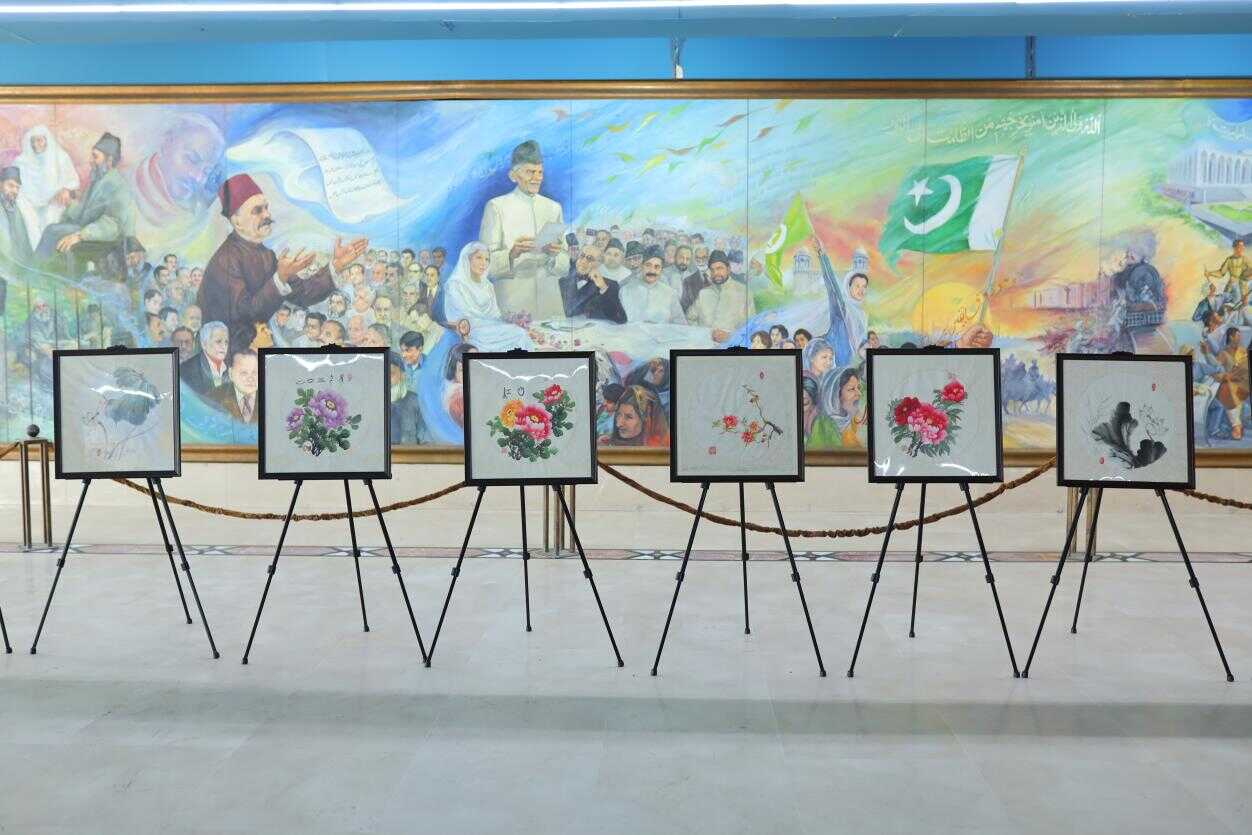
“Hero Mudan” Pak-China Friendship Calligraphy and Painting Exhibition at the Islamabad Museum, photo provided to CEN
The Islamabad Museum and the Pakistan National Council of the Arts (PNCA) have recently hosted and are currently hosting, major joint art exhibitions. In early January 2026, the “Hero Mudan” Pak-China Friendship Calligraphy and Painting Exhibition was inaugurated at the Islamabad Museum, featuring 150 works curated by Dr. Shaista Haider and Ms. Wang Chunping. More recently, the “Eternal Friendship: China-Pakistan Art Exhibition” was held at the PNCA, featuring artists from both nations.
“Now it is time to increase and develop people-to-people contacts by arranging such exhibitions, opening the windows of educational institutions, and facilitating tourism,” he said. Noting that Chinese cultural heritage and tourism are far more advanced than most Pakistanis realize, he called for improved access to make these exchanges more accessible to ordinary citizens. Such accessibility, he believes, will allow more Pakistanis to experience firsthand the richness of Chinese civilization and, in turn, welcome more Chinese visitors to explore Pakistan's own archaeological treasures.



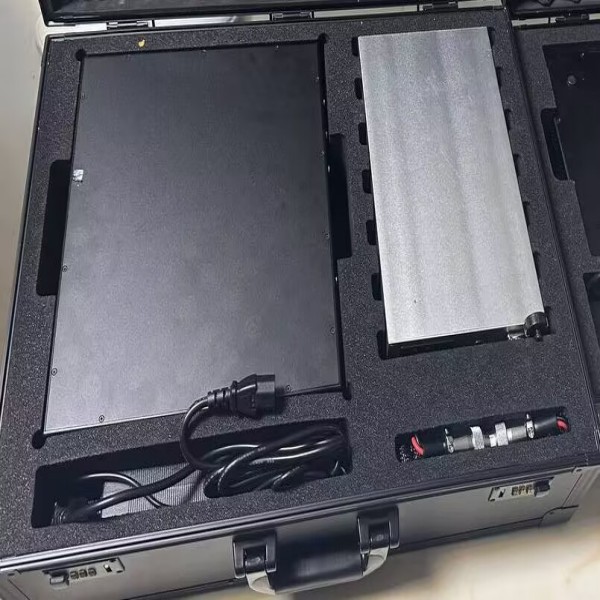
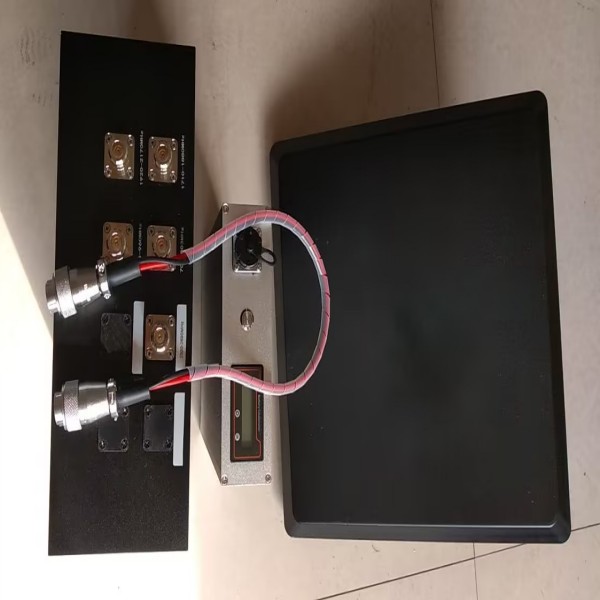
Sms Blaster Machine Famous Manufacturer.sms broadcaster machine price,sms blasting machine,SMS Broadcaster Machine,Bulk SMS Blaster,SMS Free Blasting Broadcast Machine.Sms Blaster Machine Can Bulk SMS automatically around you with radius 1000m-3km.We specializes in providing cutting-edge SMS advertising marketing equipment that allows businesses to reach their target audience more effectively!
Telegram:@smsxcg
WhatsApp:+1(305)6290111
Address:1600 Pennsylvania Ave NW,Washington,DC20500,USA