Telegram:@smsxcg
WhatsApp:+1(305)6290111
Address:1600 Pennsylvania Ave NW,Washington,DC20500,USA


BEIJING, March 28 (Xinhua) -- "Flickering like fireflies in the dark," renowned Chinese sci-fi writer Liu Cixin wrote in the early 2000s, describing a small, largely unnoticed community of Chinese sci-fi writers and fans. "But like spring grass, we are spreading."
A little over a decade later, Liu's "The Three-Body Problem" captured global acclaim with the 2015 Hugo Award, turning a once-niche genre in China into a booming industry, with annual revenues exceeding 100 billion yuan (about 14.5 billion U.S. dollars) for three consecutive years since 2023.
Across the country, people from various walks of life -- journalists, engineers, even pop singers -- have been inspired to take up the pen. Their stories, ranging from interstellar epics to near-future visions, have been translated into multiple languages, reaching audiences far beyond China's borders.
On Thursday, in downtown Beijing, a seminar brought together some of the country's rising sci-fi voices to explore the global outlook of Chinese sci-fi, drawing more than 120 writers, translators, publishers, and fans from over 20 countries.
"Liu is our current No.1 bestseller," said Nicolas Cheetham, managing director of the British publisher Head of Zeus, which released the English edition of "The Three-Body Problem."
"Liu's success opened up a world of possibilities for Chinese sci-fi writers," said Gu Shi, a rising author in the field. "It was a turning point. One day, we realized our work could reach readers around the globe."
Since 2016, several of Gu's short stories have appeared in English in Clarkesworld, a U.S. science fiction magazine. Her story, "Strength Test," was adapted into an animated short film in 2021 and screened at international film festivals in multiple countries, including the United States, Britain, Austria and India.
"Knowing your work could one day be read and watched worldwide brings both a weighty responsibility and a powerful motivation," Gu said. "When I'm crafting a new story, I think carefully about how to weave Chinese cultural heritage into visions of the future."
Translation, Gu emphasized, plays a critical role in a story's success abroad -- a point widely echoed in the room.
Despite differences in language and culture, writers and translators agreed that science fiction is uniquely suited for global audiences.
"Readers expect the new and the different, and science can serve as a kind of lingua franca to bridge cultural gaps," Cheetham explained.
"I grew up and live in China, so it's natural that the ideas and philosophies I encounter here find their way into my work," said Liang Ling, a 1992-born sci-fi writer whose work often delves into the pressures of daily life in rapidly urbanizing cities.
"But science fiction deals with universal human concerns -- time, life, memory. It's a language the world can understand," she added.
International scholars at the seminar noted that Chinese sci-fi authors are actively transforming traditional cultural elements into core narrative tools, thereby giving fresh life to history, ecology and gender.
This approach, steeped in rich Chinese culture, not only stretches the boundaries of the genre but also offers global readers a lens into contemporary China.
"Science fiction writers are the ones who tiptoe into the future -- and sometimes see the future take shape," said Wang Jinkang, whose 1993 debut envisioned brain-computer interfaces, decades before the concept appeared in the country's latest five-year plan for future development priorities.
Seminar participants widely agreed that rapid technological advances provide fertile ground for sci-fi, while sci-fi itself serves as both a "laboratory for ideas" and an early-warning system for potential risks and challenges ahead.
To chart the unique contributions of Chinese science fiction to the global stage over the next decade, award-winning author Chen Qiufan said Chinese writers must approach their work with bold imagination -- exploring not just literature but also thought, values and aesthetics.
"I'm crafting a sci-fi story inspired by my own research and everyday life," said Zhao Xiaorui, an engineer and avid sci-fi fan, after the seminar. "With the society fast changing, life itself feels like science fiction, doesn't it?"



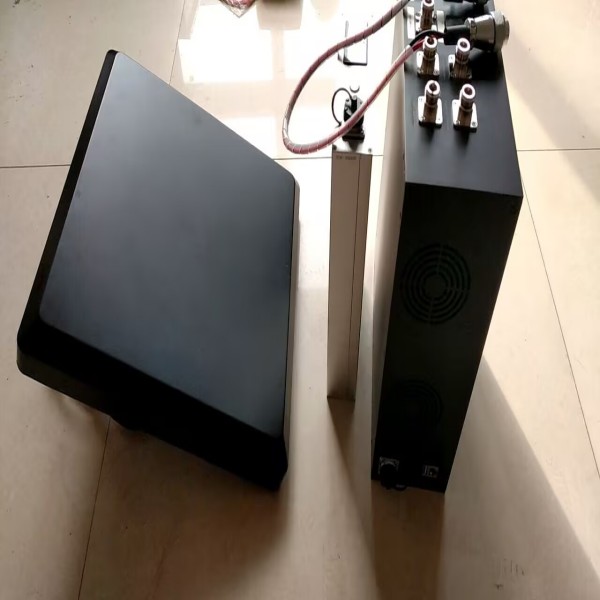
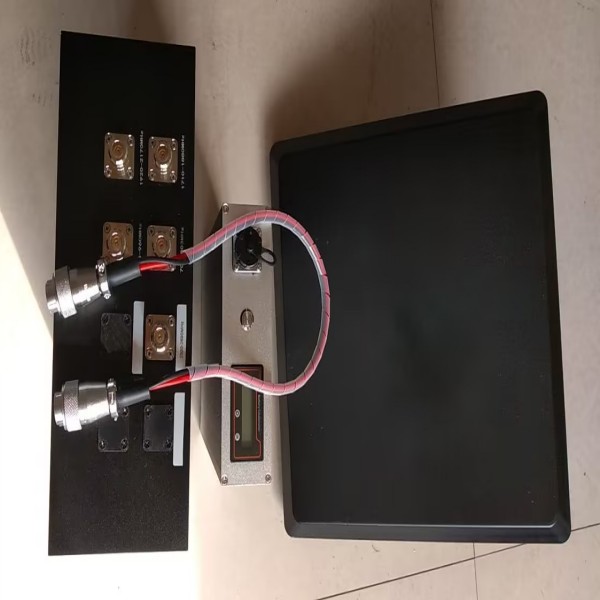
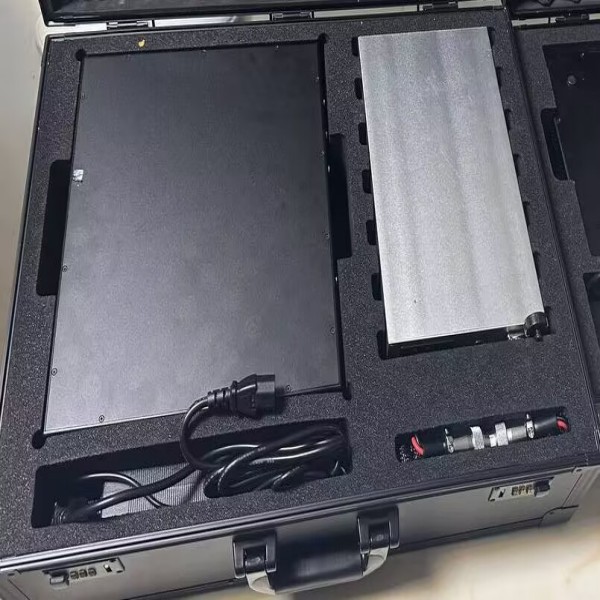
Sms Blaster Machine Famous Manufacturer.sms broadcaster machine price,sms blasting machine,SMS Broadcaster Machine,Bulk SMS Blaster,SMS Free Blasting Broadcast Machine.Sms Blaster Machine Can Bulk SMS automatically around you with radius 1000m-3km.We specializes in providing cutting-edge SMS advertising marketing equipment that allows businesses to reach their target audience more effectively!
Telegram:@smsxcg
WhatsApp:+1(305)6290111
Address:1600 Pennsylvania Ave NW,Washington,DC20500,USA