Telegram:@smsxcg
WhatsApp:+1(305)6290111
Address:1600 Pennsylvania Ave NW,Washington,DC20500,USA


by Liu Qiyu
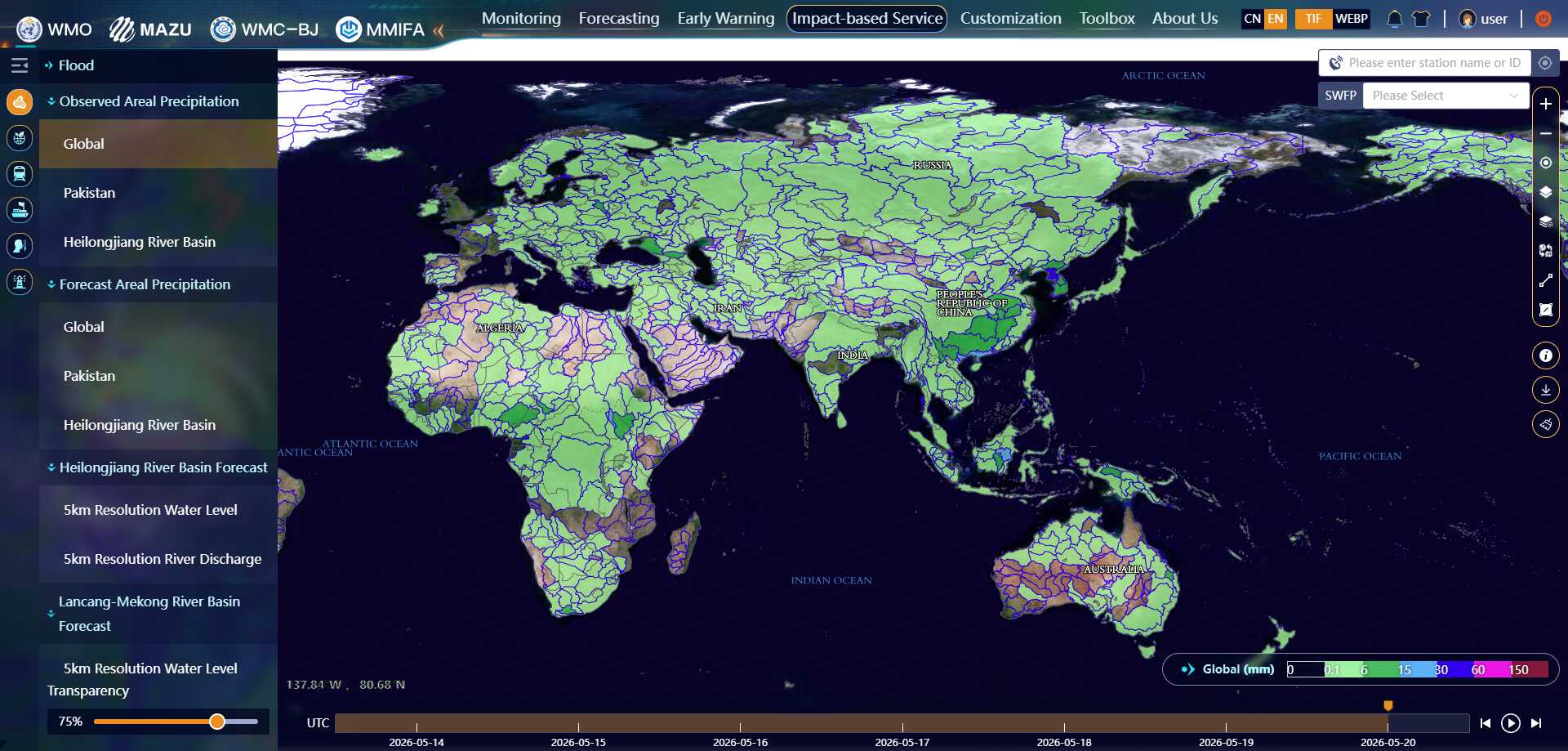
In May 2026, summer in Pakistan is arriving early, and dangerously.
This month, the National Disaster Management Authority (NDMA), Pakistan has issued repeated alerts for both heatwaves and glacial lake outburst flood (GLOF) risks. The country may experience a more intense summer this year, with temperatures in some areas likely to reach 50 ℃ during May and June, while in the north, rising heat combined with western disturbances is again raising the risk of sudden flooding from rapidly expanding glacial lakes.
Marking 75 years of ties, the China-Pakistan friendship is finding its latest and perhaps most urgent expression in meteorological cooperation. It is a real-time demonstration of how two long-standing partners can build shared resilience against a global climate threat.
A Country Where Climate Disasters Are Becoming the New Normal
For a country with over 7,000 glaciers and 3,000 glacial lakes, heat and flooding are not independent events; they are closely linked parts of the same cascading system. Warming accelerates glacier melt and meltwater expands unstable lakes, hence intense rainfall can trigger sudden outbursts that rush downstream into valleys, villages, and infrastructure corridors.
“Pakistan is a country that has hyper-diverse climatic variation, which leads to hyper-diverse climatic threats,” says Dr. Sayyed Muhammad Tayyab Shah, Executive Director Technical at the National Disaster Management Authority, Pakistan. From the northern mountains to the southern delta, Pakistan is simultaneously facing glacial lake outburst floods, landslides, urban flooding, heatwaves, forest fires, storm surges, and sea water intrusion, etc. “Their frequency, quantum, scale are increasing with every passing year,” he notes.
In Islamabad, Dr. Muhammad Afzaal Karori, Director General of the Pakistan Meteorological Department (PMD), focuses on the human cost of a changing climate, specifically the displacement already underway. He points to Pakistan’s most vulnerable regions in Gilgit-Baltistan and upper Khyber Pakhtunkhwa, where steep valleys and glacier-fed rivers leave little margin for error, and the displacement of entire villages creates a cascading crisis for the nation.
During the 2025 flood season, the PMD issued 15 to 16 weather alerts based on a cloud-based early warning system. Dr. Karori says no casualties were reported in the specific valleys where these instruments and forecasting systems were installed.
MAZU Tailored Application in Pakistan
The system behind those warnings is a cloud-based platform with a whole-package solution known as MAZU (Multi-hazard, Alert, Zero-gap, Universal Coverage) - China’s solution responding to the United Nation’s Early Warning for All initiative. Engineered to support nations anticipate extreme weather with greater precision, MAZU integrates satellite monitoring, observational networks, and AI modeling to provide comprehensive multi-hazard forecasts, from which impact-based warnings could be delievered in a timely and reaching manner. To better contribute to global disaster preparedness, China has co-developed customized versions of the system with those climate-vulnerable countries including Pakistan.
The customized version for Pakistan concentrates on its most pressing weather-related threats, including heatwaves, heavy rainfall, floods, and agricultural meteorological hazards. On the Chinese side, the challenges went beyond simply technologies.
Model localization presented the first major challenge. “Some algorithms were not fully applicable to local conditions, so we rebuilt and retrained them specifically for Pakistan,” says Dr. Yang Shunan, Deputy Director of the Global Meteorological Division at the National Meteorological Centre of China Meteorological Administration (CMA).
The second involved data integration. Pakistan’s observational datasets differed widely in format and consistency, which required assimilation before they could be incorporated into a unified forecasting system.
Infrastructure constraints were the third consideration. “We worked to keep the platform front-end lightweight,” she says, “so access speed and network demand could remain operational under local conditions.”
The result was a hybrid architecture, with high-intensity computation handled in China while optimized products were delivered to Pakistan through a cloud-based system tailored for low-bandwidth environments.
From Forecasts to Disaster Risk Reduction Actions
Its impact is already visible in operations.
Dr. Yang recalls a regional winter weather event striking Pakistan in 2025 involving mixed rain and snow. Through the MAZU platform, China cooperated with Pakistan in joint precipitation forecast analysis and early warning delivery, which was well applied by local forecasters. The system can generate real-time early warning bulletins during hazardous weather by combining numerical model outputs with joint interpretation from forecasters.
Images of China’s Fengyun Meteorological Satellites have also been integrated into the platform. A dedicated satellite module provides cloud imagery, convective storm tracking, flood mapping, agricultural monitoring, and marine weather observations tailored to Pakistan’s local conditions. During the 2025 monsoon season, Fengyun data also supported disaster impact assessment, including flood evolution analysis.
The system has also extended into agricultural service, including drought monitoring, crop growth assessment, and yield forecasting, extending its role beyond disaster response. These tools provideforecasting guidance throughout the entire growth cycle from sowing and field management to harvest. Dr. Zhang Xingying, Director General of the Department of International Cooperation, CMA, notes that these services support safeguarding Pakistan’s food security and stabilizing farmers’ incomes, which contribute rural poverty reduction and sustainable growth.
The cooperation is also improving CMA’s forecasting. Dr. Zhang says Pakistan’s terrain covers glaciers, mountains, plains, and deserts, spanning divserve climate disasters which serves as a ground for multi-hazard early warning technologies. Many of its climate hazards, including monsoon floods and glacial lake outbursts, closely resemble those of China’s bordering regions, allowing both sides to enhance warning systems through shared practice.
When Extreme Weather Ignores Borders
For Dr. Zhang, China-Pakistan meteorological cooperation has long been tied to joint public welfare, economic development, and global climate governance.
Global warming continues to accelerate and has turned local extreme weather events into universal threats. Developing countries bear the brunt of this crisis while facing significant hurdles in technical expertise and financial resources. “China-Pakistan meteorological cooperation demonstrates a practical and adaptable model of South–South cooperation for climate resilience,” he says.
Both countries are located in the Asian monsoon region and confront climate threats from floods, glacial lake outburst floods, and extreme heat. Dr. Shah sees the partnership as extending beyond bilateral assistance, emphasizing that climate change fundamentally transcends national borders and that the cooperation could offer a model for the broader Global South.
Since the 1980s, cooperation has expanded from weather observation and forecasting exchanges to meteorological satellite remote-sensing applications, joint research, and personnel training. The partnership also supports development along the China-Pakistan Economic Corridor through joint disaster prevention and mitigation via meteorological service.
Dr. Zhang says such system works well because it focuses more on flexible modulars and low-cost solutions instead of large infrastructures, which can be better adapted to local conditions.
Bridging the Final Mile Together
A warning message on a screen is only as effective as the action it inspires on the ground.
For CMA and PMD, the meteorological collaboration is moving deeper into a digital core. Both sides are launching joint research into AI meteorological models and AI-driven identification of extreme weather patterns. Beyond disaster response, this partnership is expanding into a comprehensive, full-chain climate service system. The cooperation will systematically broaden into supporting agriculture and food security, water resource management, urban climate resilience, aviation meteorology, and ecological protection, safeguarding high-quality socio-economic development.
In face of a volatile global climate, the meteorological partnership is proving that a shared future isn’t just a vision.



Sms Blaster Machine Famous Manufacturer.sms broadcaster machine price,sms blasting machine,SMS Broadcaster Machine,Bulk SMS Blaster,SMS Free Blasting Broadcast Machine.Sms Blaster Machine Can Bulk SMS automatically around you with radius 1000m-3km.We specializes in providing cutting-edge SMS advertising marketing equipment that allows businesses to reach their target audience more effectively!
Telegram:@smsxcg
WhatsApp:+1(305)6290111
Address:1600 Pennsylvania Ave NW,Washington,DC20500,USA