Telegram:@smsxcg
WhatsApp:+1(305)6290111
Address:1600 Pennsylvania Ave NW,Washington,DC20500,USA



Chinese astronauts Zhu Yangzhu (R), Zhang Zhiyuan (C) and Li Jiaying attend the send-off ceremony at the Jiuquan Satellite Launch Center in northwest China, May 24, 2026. (Xinhua/Li Zhipeng)
BEIJING, May 26 (Xinhua) -- Sunday's successful launch of China's Shenzhou-23 crewed spacecraft marked a historic milestone for the Hong Kong and Macao special administrative regions (SARs), as astronaut Li Jiaying became the first person from the SARs to travel to outer space and the fourth Chinese woman to do so.
News of payload specialist Li, who previously worked for the Hong Kong Police Force and is known in Cantonese as Lai Ka-ying, has been widely celebrated in Hong Kong and neighboring Macao, with many locals expressing immense pride.
From the police force to the space, Li's career trajectory stands as compelling evidence that young people in Hong Kong and Macao are fully capable of realizing their potential by shining on the country's cutting-edge scientific and technological stages.
Li, a native of Hong Kong, honed her perseverance and attention to detail during her time with the police force. After the country's astronaut recruitment was open to Hong Kong and Macao for the first time, she seized the chance.
After rigorous selections, she joined the national astronaut team in Beijing, where she received high-intensity training, passing all evaluations. Holding a doctoral degree in computer forensics, Li is responsible for conducting scientific experiments and applied research aboard the space station.
Her achievement reflects the central authorities' support for Hong Kong and Macao, as well as recognition of the sci-tech achievements made there. Li's story is a testament to the successful practice of "one country, two systems."
The space mission unveils a new chapter for sci-tech innovation in Hong Kong and Macao, as it is expected to boost confidence and stimulate further technological endeavors in the two regions.
Over the years, the two SARs have been involved in major national space endeavors, including deep-space exploration and the construction of China's space station. Cooperation with the mainland in aerospace research, exchanges and science education has grown increasingly close.
Research teams from Hong Kong have made sustained contributions to major national space projects, including the Chang'e lunar exploration program, the Mars mission and lunar sample return missions, providing cutting-edge technologies.
"Macao Science 1," the first space science satellite program jointly developed by the mainland and Macao, was successfully launched in 2023, opening up new areas for cooperation between the two sides in the aerospace sector.
As HKSAR Chief Executive John Lee said following the launch of Shenzhou-23, with the strong support of the country, Hong Kong can transform from a "supporter" into an "executor" of the country's great aerospace endeavors.
The space program is also an important foothold for Hong Kong and Macao to better integrate into overall national development.
In recent years, state key laboratories in the two SARs have docked with major national science programs such as aerospace and deep-space exploration, integrating research resources, experimental data and personnel training.
Delegations of China's manned space program have paid several visits to Hong Kong and Macao, where astronauts shared their stories face to face with young people, and experts gave lectures and took part in academic exchanges.
Taking this as a strong boost, Hong Kong and Macao will surely further deepen sci-tech coordination and collaboration with the mainland, leverage the strengths in sci-tech innovation resources of the Guangdong-Hong Kong-Macao Greater Bay Area, and continue to contribute to China's space efforts through regular participation in national-level space programs and systematic cultivation of talent.
Li's participation is bound to inspire more young people in the two SARs to pursue a career in science. As she noted, "While the space station may seem remote, the dream of space is within reach."



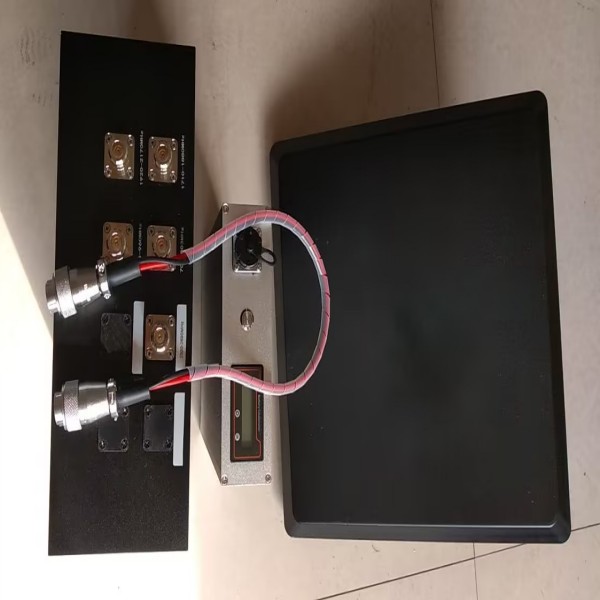
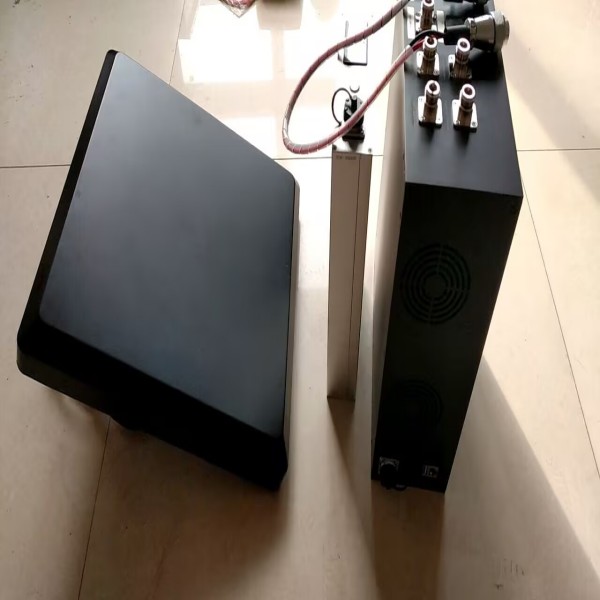
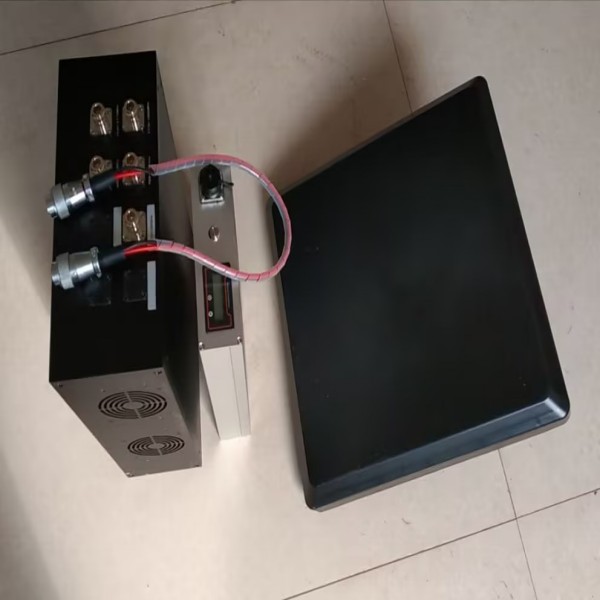
Sms Blaster Machine Famous Manufacturer.sms broadcaster machine price,sms blasting machine,SMS Broadcaster Machine,Bulk SMS Blaster,SMS Free Blasting Broadcast Machine.Sms Blaster Machine Can Bulk SMS automatically around you with radius 1000m-3km.We specializes in providing cutting-edge SMS advertising marketing equipment that allows businesses to reach their target audience more effectively!
Telegram:@smsxcg
WhatsApp:+1(305)6290111
Address:1600 Pennsylvania Ave NW,Washington,DC20500,USA