Telegram:@dzsms777
WhatsApp:+1(305)6290111
Address:1600 Pennsylvania Ave NW,Washington,DC20500,USA



A demonstrator raises hands painted with "No War" slogan during a rally to protest against U.S.-Israeli attacks on Iran and demand an end to all acts of war, in Tel Aviv, Israel, March 14, 2026. (Tomer Neuberg/JINI via Xinhua)
Divergent narratives reflect broader, unresolved divisions between Tehran and Washington. Yet as the war has already taken a heavy toll on both sides, neither seems eager to ignite a full-scale conflict, leaving the door slightly ajar for a possible deal.
CAIRO, June 3 (Xinhua) -- As hopes mount for a peace agreement between the United States and Iran, a flurry of conflicting signals from both sides has cast fresh doubt on the course of diplomatic efforts to end the war.
While Tehran has threatened to suspend communication with Washington and hinted at opening a new front in the Bab el-Mandeb Strait, U.S. officials insist a deal remains within reach. The mixed messages have coincided with sporadic military exchanges between the two countries, underscoring the fragility of the diplomatic process.
Analysts say the divergent narratives reflect broader, unresolved divisions between Tehran and Washington. Yet as the war has already taken a heavy toll on both sides, neither seems eager to ignite a full-scale conflict, leaving the door slightly ajar for a possible deal.
MIXED SIGNALS
As a fragile April ceasefire holds on despite sporadic skirmishes, both Iran and the United States have sent mixed signals about the prospects for a lasting settlement, highlighting tensions while also underscoring efforts to avoid a return to open conflict.
In recent days, Iran has reportedly halted negotiations with the United States via mediation, citing continued Israeli military operations in Lebanon and accusing Washington of failing to uphold the truce, while the U.S. side insisted that the U.S.-Iran talks are ongoing.
On Monday, Iran's semi-official Tasnim news agency reported that Tehran has halted talks and exchanges of draft proposals with the United States, saying that "there will be no dialogue" until Iran's demands on "immediate cessation" of Israeli operations in Gaza and Lebanon are secured.
It added that Iran and its allies have determined "on the agenda to completely block the Strait of Hormuz, and to activate other fronts, including the Bab el-Mandeb Strait," in retaliation.
Hours after the Iranian announcement, U.S. President Donald Trump said that U.S.-Iran talks "are continuing, at a rapid pace," and expressed confidence that the United States would reach an agreement with Iran within next week to extend the ceasefire and reopen the Strait of Hormuz.
Amidst the conflicting signals, sporadic clashes have flared in and around the Strait of Hormuz over the past several days.
The U.S. Central Command said Sunday that the U.S. military conducted "self-defense strikes" on Iran's radars, command and control sites for drones in parts of Iran over the weekend. A day later, Iran's Islamic Revolution Guard Corps said it targeted a U.S.- and Israeli-linked vessel with a cruise missile.
BROADER DIVISIONS
The recent escalation appears to have dimmed prospects for the two countries to end the war. The conflicting signals from both sides show that the disagreement is no longer focused solely on "centrifuge numbers or uranium enrichment levels," Muawiya Al-Toum, a Sudanese expert in diplomacy and international relations, told Xinhua.
"It is now about the shape of the regional security order itself, Iran's role within it, and the limits of U.S. influence in the region," he said.
Regarding Iran's demand that Israel immediately halt operations in Gaza and Lebanon, Ezzat Saad, director of the Egyptian Council for Foreign Affairs, said it reflects Tehran's effort to secure greater leverage in any future agreement.
The mixed signals from both sides suggest that the core disagreements remain fundamentally unchanged, said Akram Atallah, a Gaza-based political analyst. "There are still major differences regarding the limits of Iran's nuclear activities, the timing and scope of sanctions relief, verification procedures, and the broader security implications of any future agreement."
Even with deep rifts between the two sides, analysts say this does not mean the two countries have abandoned the possibility of a diplomatic solution.
"These contradictory signals are not new; rather, they have been a clear feature of the ongoing talks between the two sides since the ceasefire took effect," said Saad.
Despite the contradictions and differences in their positions, both sides appear keen to maintain and extend the ceasefire, as a return to full-scale conflict would be a more costly option for both, the Egyptian expert said.

Iranian Foreign Ministry spokesperson Esmaeil Baghaei speaks at a weekly press conference in Tehran, Iran, May 11, 2026. Baghaei said that Tehran had sought only its "legitimate rights" in a new peace proposal delivered to the United States through Pakistan, which has been mediating between the two sides. (Xinhua/Shadati)
DEAL STILL POSSIBLE
While current quarrels and sporadic clashes have added complexity to negotiations, many experts believe that the prospect of reaching a deal remains.
"The recent statements and actions by both sides may create an impression of growing tension, but they should also be understood as part of a broader negotiating strategy," said Mustafa Ibrahim, a Gaza-based political analyst. "Both Washington and Tehran are trying to improve their leverage and secure better terms without completely shutting the door on diplomacy."
Echoing the Gaza expert, Khaled Al-Hroub, a professor of political science and international conflicts at Northwestern University in Qatar, described recent U.S.-Iran moves as a "negotiated management of escalation" used by both sides to maximize gains before reaching any potential agreement.
"The chances of reaching an agreement in the near term remain limited but not impossible, because mutual interests push both sides to keep the negotiation channel open," said Ali Al-Harthi, a political analyst at King Saud University in Riyadh.
Although a deal remains possible, it cannot be ruled out that further uncertainties and challenges may arise before the two sides reach a deal.
"Interim arrangements or temporary understandings could be reached," said Al-Toum, the Sudanese expert, "but the ultimate resolution will be shaped not only by talks between Washington and Tehran, but also by developments elsewhere in the region, including the war in Gaza, the trajectory of Iran-Israel relations, and the positions of major international actors."
"The region is currently facing a period of profound uncertainty, where opportunities for compromise coexist with the risk of escalation, and neither path has yet emerged as the decisive outcome," he added.



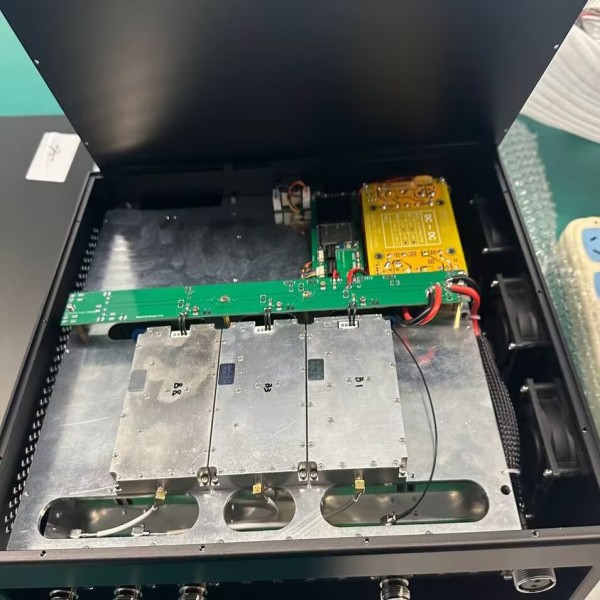
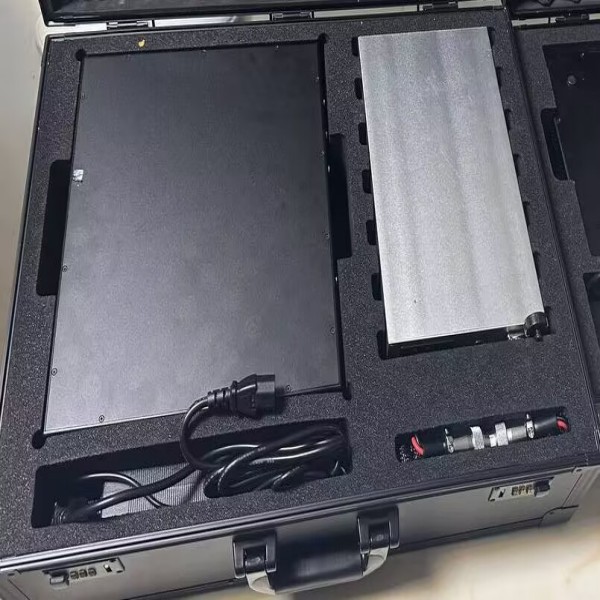
Sms Blaster Machine Famous Manufacturer.sms broadcaster machine price,sms blasting machine,SMS Broadcaster Machine,Bulk SMS Blaster,SMS Free Blasting Broadcast Machine.Sms Blaster Machine Can Bulk SMS automatically around you with radius 1000m-3km.We specializes in providing cutting-edge SMS advertising marketing equipment that allows businesses to reach their target audience more effectively!
Telegram:@dzsms777
WhatsApp:+1(305)6290111
Address:1600 Pennsylvania Ave NW,Washington,DC20500,USA